

Mr. Reiner

A note before we begin:
This isn’t my usual post. Rob Reiner died two days ago, and I’ve been sitting with that in a way I didn’t anticipate. Sometimes you don’t realize someone was a pillar until you’re wobbly in their absence. And if the whole point of what I do here is to show how human we all are across time and space—how an ancient Mesopotamian’s complaint about bad copper feels immediately recognizable, how history is just us, over and over, trying to figure out how to be decent to each other—then grieving a filmmaker who taught millions of strangers how to articulate loneliness and love and the ache of growing up feels like exactly the kind of thing that belongs here. The people who give us language for what we’re feeling, who turn private grief into shared experience, who make it possible to point at a screen and say yes, that, exactly that—they’re part of how we survive being human. If this isn’t what you came here for, I understand. But tonight, I needed to write something, and so I’m going to hit publish.
There are countless people across history we never talk about. Farmers who fed empires, midwives who delivered generations, scribes who kept records no one reads anymore. The vast majority of human existence is anonymous: people who lived and died and left no mark we can trace.
Then there are the ones we do talk about. Presidents. Generals. Inventors whose names end up in textbooks, whose decisions changed borders or technologies or the course of nations.
And then, somewhere between the forgotten and the enshrined, there are the memory-makers.
Not the ones who create history, but the ones who shape how we feel about being alive. The ones who give us language for things we didn’t know how to say. Who turn private emotions into shared experience. Who make it possible to point at something on a screen and say: yes, that, exactly that.
Mr. Reiner was a memory-maker. A movie-maker. Which sounds smaller until you realize: he’s the reason an entire generation knows exactly what it feels like to lose the friends you had when you were twelve. He’s why “as you wish” means “I love you.” He’s why we turn the volume to eleven and expect people to understand what we mean.
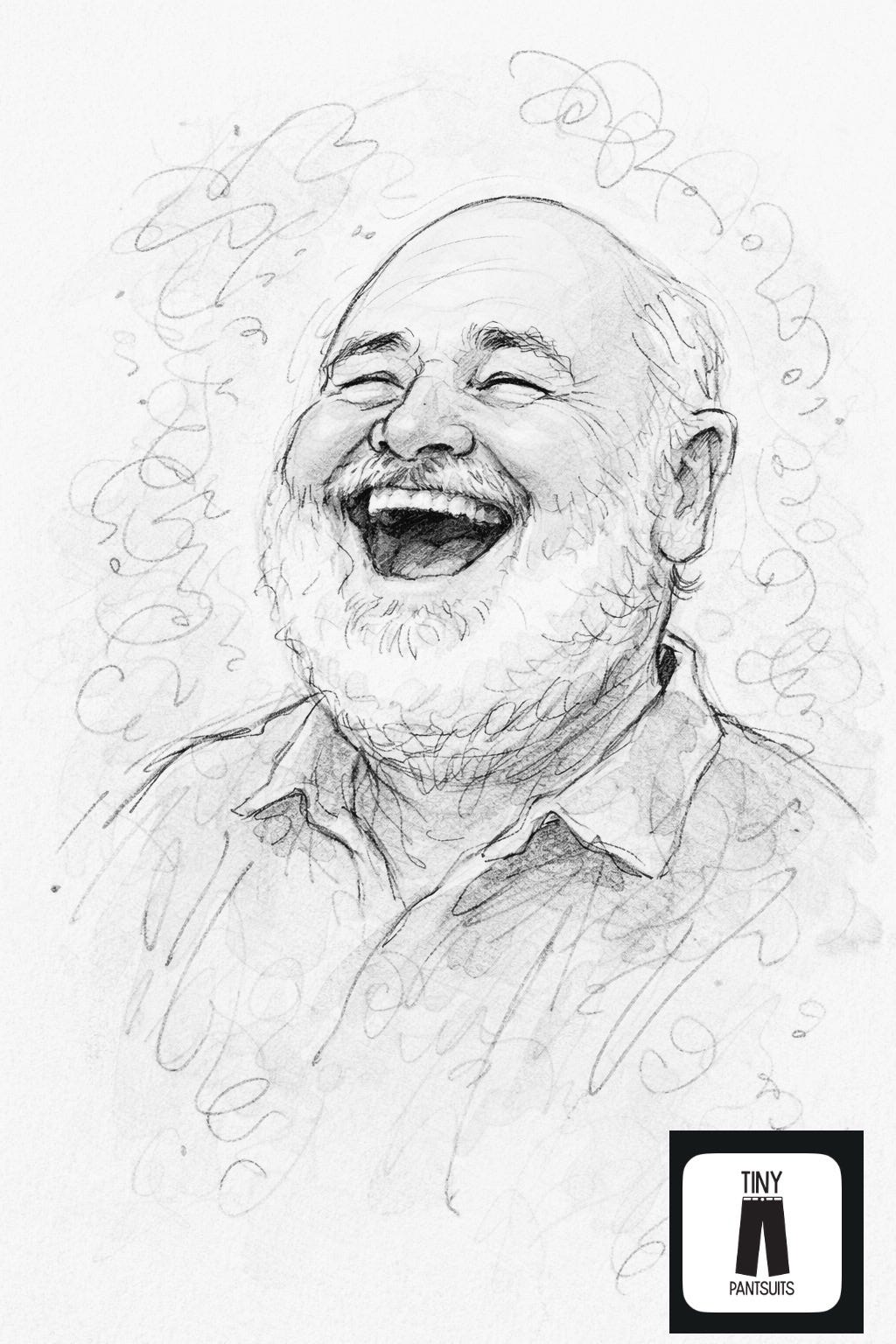
For people who were going to movies in the ‘80s, Mr. Reiner isn’t just a director they admired. He’s woven into the fabric of their memories: first dates, late-night dorm room debates, the VHS tapes they wore out. He’s part of their history in a way no textbook can capture.
And for those of us who came along later, who know him as Jess’s wonderfully neurotic father on New Girl or as the warm, exasperated dad in The Wolf of Wall Street, trying his best to understand his son’s increasingly unhinged life choices, Mr. Reiner was the person who radiated something rare: the sense that he’d give great hugs and slightly irreverent advice. That he’d listen to your problems and then tell you something both funny and true that would somehow make it all feel manageable.
I never met him. If some of the stories people believe are true, if there’s something beyond this stupid life, maybe I’ll meet him someday. And that’s exactly how I’d address him: Mr. Reiner. With the respect you give someone who taught you how to understand your own heart.
-----
Here’s something that will wreck you if you let it: Mr. Reiner met his wife, Michele, on the set of When Harry Met Sally.
The film he was making about whether men and women could be friends, about two people who spent years circling each other before finally admitting what everyone else already knew, that’s where he fell in love.
And here’s the thing: originally, Harry and Sally weren’t supposed to end up together. The script had them going their separate ways, a bittersweet acknowledgment that sometimes timing is everything and everything isn’t enough.
But Mr. Reiner met Michele. And suddenly that ending felt wrong. Because if he could find this, this person, this love, this proof that the cynic can be converted, then Harry and Sally deserved the same chance.
So he changed it. Gave them the New Year’s Eve speech, the desperate run through the party, the admission that all those neurotic details aren’t obstacles to love but evidence of it.
“I love that you get cold when it’s 71 degrees out. I love that it takes you an hour and a half to order a sandwich.”
That’s not just good writing. That’s autobiography. That’s a man who discovered that the particularities of another person can become the whole reason you want to wake up in the morning.
They were married for thirty-three years. Long enough to prove that fairy tales can happen, that the volume really does go to eleven, that sometimes when you storm the castle you actually win.
-----
Before he made us believe in second-chance romance, Mr. Reiner made us laugh about a fictional British rock band whose amps went to eleven. This Is Spinal Tap was entirely improvised: no script, just actors being ridiculous with absolute commitment.
“It’s such a fine line between stupid and clever,” says David St. Hubbins, and that was Mr. Reiner’s whole approach. He never condescended to his characters. He believed in them even when they were describing a Stonehenge monument that arrived at 18 inches instead of 18 feet.
Studios told him it was too scary to improvise an entire film. His response? “To me, it was the opposite. I wasn’t scared.”
That’s the thing about Mr. Reiner. He wasn’t scared to let people be fully themselves.
-----
Jerry O’Connell was eleven and hyperactive when he filmed Stand By Me, the kind of kid always told to sit down and be quiet. During one scene, he was ad-libbing, and Mr. Reiner yelled “Cut!” O’Connell thought he was in trouble. Again.
But Mr. Reiner said: “Jerry, keep going man. That’s what I’m talking about right there. More.”
Not less. Not smaller. More.
That was his gift. He saw what was already there and amplified it. Wil Wheaton said Mr. Reiner treated him with more kindness than his own father ever did. The four boys in Stand By Me weren’t just acting, they became the friendship they were portraying, because Mr. Reiner made space for it.
“I never had any friends later on like the ones I had when I was twelve. Jesus, does anyone?”
That line has been passed down like an heirloom. Wheaton used it in his tribute this week. It’s the truest thing anyone’s ever said about growing up: that ache of knowing some things can’t be recovered, only remembered.
And here’s the other line, the one that comes right before it, the one that might matter even more:
“Although I hadn’t seen him in more than ten years, I know I’ll miss him forever.”
--—
In one of his last interviews, Mr. Reiner talked about the assassination of Charlie Kirk, a commentator he’d opposed politically for years. He could have weaponized it like some of the worst people with access to an audience like to do. Instead, he talked about forgiveness.
He was moved, he said, by Kirk’s widow’s grace. “I’m Jewish, but I believe in the teachings of Jesus and I believe in forgiveness,” he said. “And what she said to me was beautiful. You know she forgave his assassin and I think that that is admirable.”
This from a man who fought fiercely for what he believed. But he understood that strength includes the capacity for mercy. That you can be principled and tender.
In A Few Good Men, Jack Nicholson snarls “You can’t handle the truth!” But the real truth of that film is quieter. It’s about choosing conscience over convenience, about handling the truth especially when it’s hard.
Mr. Reiner knew that moral courage isn’t loud. It’s steady.
-----
“Have fun storming the castle!” That’s what Miracle Max yells in The Princess Bride, and it’s become shorthand for attempting something absurd because the cause is worth it.
Mr. Reiner understood fairy tales: the old, bloody, honest ones where true love requires sacrifice and cleverness and coming back from mostly dead. The Princess Bride works because he never forgot these stories are instruction manuals. They teach us how to be brave when terrified, how to love when impractical.
“Death cannot stop true love. All it can do is delay it for a while.”
“As you wish,” says Westley, and we all know he means I love you.
-----
Mr. Reiner said it himself: “The first years truly last forever.”
He wasn’t just talking about childhood. He meant the stories we encounter early, the examples we’re shown, the moments that teach us who we are.
For a lot of us, Mr. Reiner was there in those first years. Not literally. We never met him. But his work was there. In the VHS tapes, the quoted lines, the blueprint for being someone who feels deeply and still shows up ready to laugh.
“It happens sometimes. Friends come in and out of your life like busboys in a restaurant.”
That’s the line from Stand By Me that doesn’t get quoted as much, but maybe should. It teaches us how to hold loss without letting it flatten us. That people matter even when they leave. Especially when they leave.
-----
Mandy Patinkin told a story that I keep turning over in my mind.
When they were filming The Princess Bride, there’s a scene where Inigo Montoya finally confronts the six-fingered man who killed his father. It’s the moment the entire movie has been building toward. Revenge. Justice. The thing Inigo has dedicated his life to achieving.
And Mr. Reiner kept telling Patinkin: “Do less.”
Over and over. “Do less.”
Patinkin didn’t understand at first. This was the big moment. Shouldn’t it be big? Shouldn’t the anger fill the screen?
But now, after Mr. Reiner’s death, Patinkin realized what he’d been trying to say. He wanted less anger so the broken heart could be felt. He wanted us to see past the fury to the grief underneath. To understand that vengeance doesn’t heal, it just gives the wound somewhere to go.
“Now I’m hearing his voice tell us all to do more,” Patinkin said. “To keep fighting, to keep living for every soul taken from this earth, that no longer has the life and breath to raise their voices for a better world. We must raise our voices for them.”
Less anger. More heartbreak. More action. More love.
That was Mr. Reiner’s final instruction, delivered through a scene filmed almost forty years ago, reaching forward through time to tell us what to do now. How to move through grief. How to honor the people we’ve lost.
We feel the broken heart. And then we do the work.
We keep making things: art, conversation, meaning. We keep believing that the people we love leave marks on us that time can’t erase. That memory is a form of immortality if we’re willing to carry it forward.
Mr. Reiner’s blueprint says: Feel the broken heart. Do the hard thing. Love your people fiercely, even when they’re far away. Even when you haven’t seen them in ten years.
Even when you’ll miss them forever.
Some friendships last a summer. Some lessons last a lifetime. And some people, the memory-makers who taught us how to see ourselves clearly, they last forever, too.
There’s a line in A Few Good Men that doesn’t get quoted as much as “You can’t handle the truth!” but maybe it should. When Daniel Kaffee is talking to Colonel Jessup, trying to understand what honor really means in a world that demands compromise, the truth slips through:
You don’t need a patch on your arm to have honor.
You don’t need permission to grieve someone you never met. You don’t need a degree in film criticism to know when something has changed you.
The memory-makers give us permission to feel. To recognize ourselves in strangers. To carry words and images and moments that weren’t ours to begin with but somehow become part of how we understand the world. To give us something to measure ourselves against.
So tonight, I’m giving myself permission to miss someone I never knew. To feel wobbly in the absence of a pillar I didn’t realize was holding something up. To turn the volume to eleven and say my gratitude is struggling to make a dent in an unanticipated, consuming, worthy grief.
Saana
Very beautiful essay. I shared your email and it touched others!!!! Thank you
This was awesome