

When Good Taste Destroys Bad Systems

Harriet Forten Purvis is a woman after my own heart, and honestly, I’m experiencing something between profound admiration and mild jealousy that I didn’t get to meet her.
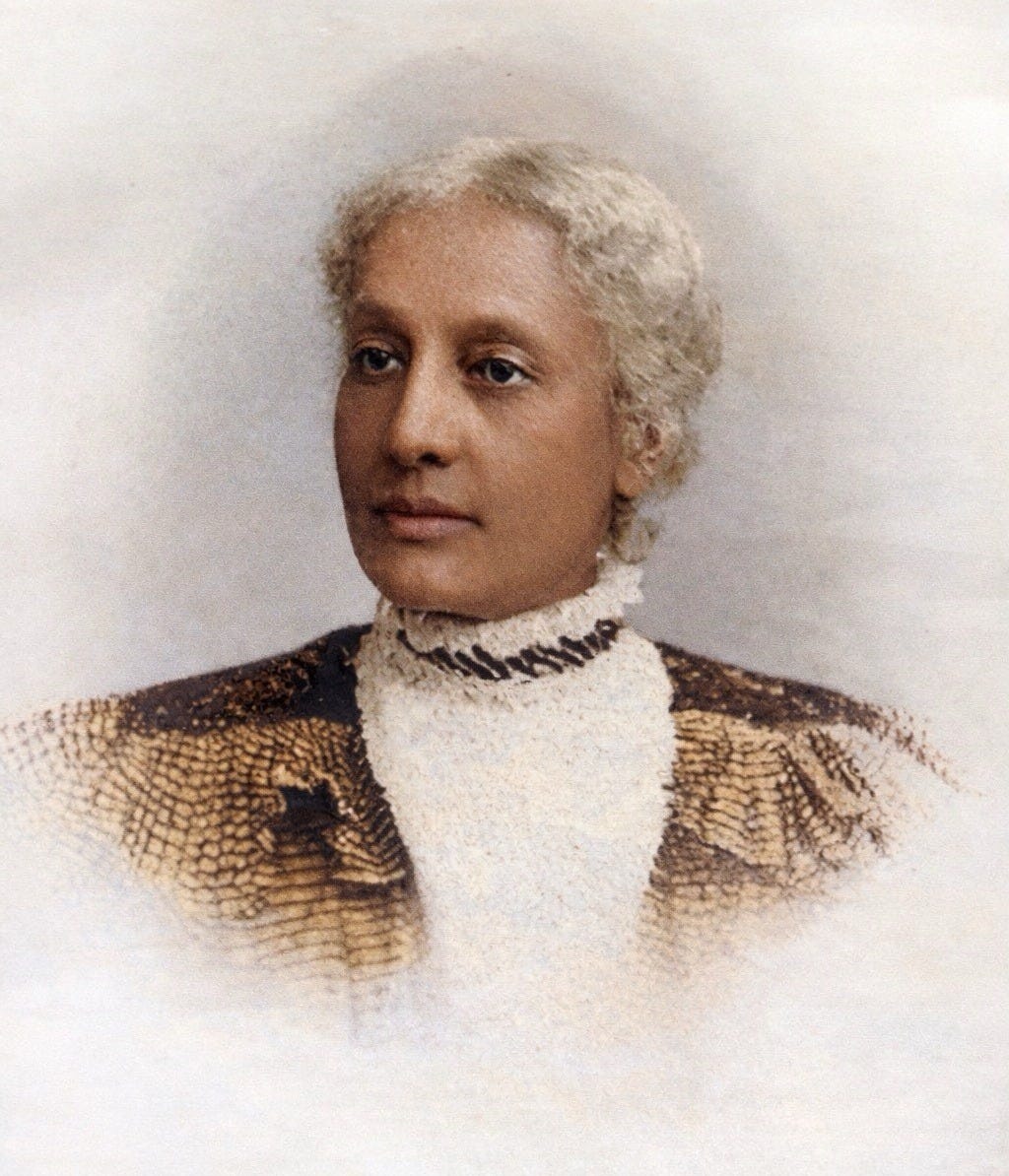
First, she had the absolutely impeccable foresight to be born into Philadelphia’s wealthiest Black family in 1810. Her father James Forten was a sailmaker (yes, we’re having a maritime week at Tiny Pantsuits) who employed both Black and white workers because he believed in the completely unhinged concept that job performance mattered more than melanin levels. Wild business model for 1810s America, still pretty revolutionary in 2026, but that’s a different newsletter. I can do a whole post about James Forten, but also you can look him up here, you coward.
The Forten household was essentially an intellectual salon where abolitionists would gather to discuss dismantling human bondage over formal tea. Little Harriet grew up watching these gatherings where brilliant minds would assemble, spend three hours discussing the absolute horrors of slavery, then sit around looking like they’d been personally defeated by the weight of human suffering and possibly also bad lumbar support from those Victorian chairs.
Harriet looked around and thought: the vibes are catastrophically off here. To her brilliant young mind, it was glaringly obvious that revolution requires substantially better funding than whatever loose change everyone could fish out of their coat pockets while looking vaguely constipated about the state of the world. Plus, these meetings had all the emotional energy of a funeral parlor and approximately the same fundraising potential as a lemonade stand in a monsoon.
When Harriet married Robert Purvis in 1831, she found herself with a husband who essentially said, “Whatever delightfully unhinged scheme you’re plotting, darling, I am absolutely here for it and will probably help you execute it with enthusiasm and considerable financial backing.” This is genuinely the foundation of any successful partnership and also most effective revolutions. Their marriage was so egalitarian and collaborative that historians literally call it “a unique phenomenon” for the time, which is scholar-speak for “we have no idea how to process a functional marriage where the woman had agency and the man thought that was deeply attractive.” Some things never change.
So Harriet invented Anti-Slavery Fairs that were basically gorgeous seasonal markets featuring exquisite handmade goods where every purchase directly funded human liberation. I cannot overstate the absolute genius of this move. These weren’t your sad, somber, guilt-inducing fundraisers where everyone stands around feeling terrible about themselves and the refreshments. No. These were events so spectacular, so aesthetically magnificent, that wealthy Philadelphia socialites were literally fighting over invitations to support abolition.
“Susan, darling, you simply must secure us invitations to Harriet’s Anti-Slavery Fair. I heard they have the most divine hand-knitted mittens, and apparently purchasing them makes plantation owners cry actual tears of impotent rage. Also, the canapés are extraordinary.”
Between 1840 and 1861, Harriet’s fairs raised genuinely staggering amounts of revolutionary funding. We’re talking enough money to make slaveholders nervous and fellow abolitionists follow suit.
Here’s what makes me want to reach back through time and high-five this woman: Harriet understood that we don’t need to sacrifice our standards to fight injustice. We can have meetings that are properly organized, events that look genuinely stunning so people don’t question our commitment to excellence, AND we can systematically dismantle oppressive systems. Revolutionary work deserves revolutionary excellence. This is not the time to cut corners, unless you’re literally cutting fabric corners to tie a perfect silk bow atop a beautifully wrapped gift that funds someone’s escape to freedom, in which case please do cut those corners with precision and make sure both ribbon ends are exactly the same length.
Every embroidered pillowcase purchased became a small but meaningful show of force against the plantation system. Every hand-knitted scarf sold was essentially a beautifully crafted middle finger to slave catchers. Harriet had figured out how to weaponize America’s obsession with shopping for the forces of human dignity, which is honestly genius. It’s like if Anthropologie suddenly became a recruitment center for economic justice, except actually effective instead of just aesthetically pleasing and vaguely progressive in a way that requires zero actual commitment outside a #BLM sticker in the window.
But Harriet wasn’t just throwing devastatingly beautiful parties and revolutionizing abolitionist fundraising. She was busy simultaneously running one of the most effective Underground Railroad stations in Philadelphia with Robert, helping approximately 9,000 enslaved people escape to freedom, and you know those were some cozy rooms beneath the trap doors installed in the floors to hide refugees from authorities. By day, elegant dinner parties where Philadelphia’s elite ate fancy cheese and discussed abolition; by night, life-saving covert operations involving secret compartments and terrified people trusting their lives to this brilliant woman’s organizational genius. The woman had range that would make anyone calling themselves a “multidisciplinary thought leader” on LinkedIn immediately delete their entire profile and go sit quietly in a corner to reconsider their life choices.
There’s more, can you believe it?
Harriet was also deeply involved in the Free Produce movement, only purchasing goods that weren’t made by enslaved labor. Even when fellow abolitionists like William Lloyd Garrison questioned its effectiveness (there’s always that one dude at the dinner party, isn’t there?), Harriet stuck to her principles because she understood that hypocrisy would undermine their entire cause. You cannot credibly argue for human dignity while your morning coffee was harvested by enslaved hands. She got it.
She co-founded the Philadelphia Female Anti-Slavery Society with her mother and sisters, creating the first biracial women’s abolitionist group. She helped organize the Fifth National Women’s Rights Convention. She fought against streetcar segregation in Philadelphia and won, getting a state law passed in 1867 for equal access to public transportation. She was close friends with Susan B. Anthony and Lucretia Mott, working alongside them for both women’s suffrage and abolition because, again, Harriet understood that justice isn’t a single-issue endeavor and lived her principle so beautifully.
Some heroes storm barricades with weapons and righteous fury; others build something so beautiful that the old world looks ridiculous by comparison, and take on the exhausting work of being consistently brave, thoughtful, well-read, and a perfect hostess through it all. Harriet chose elegance as her battlefield and made joining the resistance…well, irresistible.
I think about her whenever I watch a prestige drama where a powerful woman has concluded competence requires the emotional availability of a tax audit and showing up looking like you got dressed in a wind tunnel during a late night earthquake is evidence of deeper priorities, and not just callously inflicting your lack of self-respect and organizational failures on everyone else who has to pretend your contempt for working alongside them is some kind of a powerful feminist statement. We could all be better about time management and we should grade ourselves nightly for how we chose to allocate our finite talents and attention that day.
Harriet Forten Purvis refused that false choice entirely and Netflix producers should, too. She showed, not telled that we can have beauty AND justice, excellence AND revolution, stunning parties AND impeccable manners AND the systematic destruction of slavery.
She was right then. She’s still right now.
xo,
Saana
If You Want to Fall Down the Harriet Forten Purvis Rabbit Hole (And You Should)
Look, I’m not going to pretend there’s a prestige HBO miniseries about Harriet waiting for you on Max, because apparently Hollywood thinks we’d rather watch another show about a tortured antihero who treats his family terribly. But here’s what actually exists:
Books That Will Make You Want to Be Her:
Fortunes of a Free Black Family: The Forstens and Purvises of Philadelphia by Julie Winch is the deep dive. Julie spent years researching the Forten-Purvis family, and it shows. Fair warning: you will become insufferable at dinner parties because you’ll want to tell everyone about Harriet’s organizational genius.
The Abolitionist Imagination edited by Andrew Delbanco has excellent context on the Philadelphia abolitionist scene where Harriet was essentially running the most effective anti-slavery operation in America while also being the best-dressed person in the room.
We Are Your Sisters: Black Women in the Nineteenth Century edited by Dorothy Sterling includes primary sources from Harriet and her contemporaries. Reading their actual words is like getting letters from the most fascinating women you never got to meet.
Articles for When You Have 20 Minutes:
The Library Company of Philadelphia has digitized materials related to the Philadelphia Female Anti-Slavery Society, including some of those gorgeous fair catalogs. Looking at 19th-century revolutionary merchandising is genuinely a spiritual experience.
The Historical Society of Pennsylvania has the Purvis family papers and abolitionist society records. Their digital collections are searchable if you want to see the actual documents Harriet helped create.
Places You Can Actually Visit:
The Byberry estate is gone (tragic), but you can visit Mother Bethel AME Church in Philadelphia where the Forten family worshipped and organized. It’s the oldest AME church in the nation and still standing at 419 S 6th Street.
The Pennsylvania Abolition Society’s archives are at the Historical Society of Pennsylvania if you want to see the actual records of Harriet’s work.
Academic Articles (Free Access):
The Digital Public Library of America has primary sources related to the Philadelphia Female Anti-Slavery Society and the anti-slavery fairs.
The Honest Truth:
Harriet doesn’t have a biography dedicated solely to her yet, which is a crime against historical justice. She tends to appear in books about her father James Forten, her husband Robert Purvis, or the broader abolitionist movement; she’s always the supporting character in someone else’s story, which is particularly galling for a woman who was clearly the main character of 19th-century Philadelphia. This is exactly the kind of thing that makes me want to write an entire book about her myself, except I have a newsletter I can’t seem to squeeze into daylight hours, and I also lack several crucial qualifications like “being a professional historian,” “ever having written a book before,” and “knowing how to obtain a book deal.”
But the Julie Winch book about James Forten is genuinely excellent and will give you everything you need to become as obsessed with Harriet as I am, if you aren’t already.
Another lesson from your brilliant mind.....and your twin??